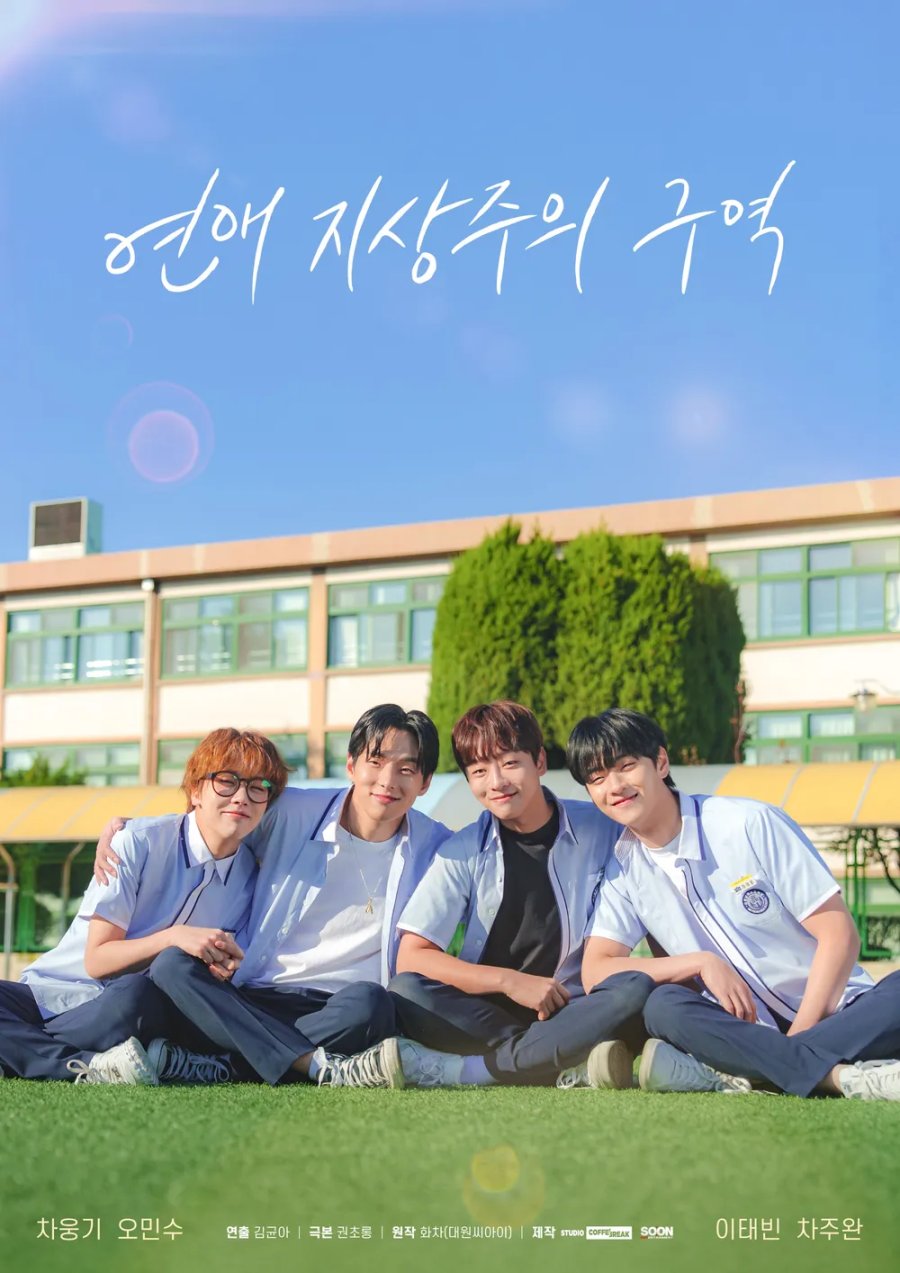
Love for Love's Sake
Tae Myung Ha, a 29-year-old, is transported into a virtual game as a 19-year-old character. Tasked with bringing happiness to Cha Yeo Woon, a talented track and field star admired for his looks and athleticism, Tae navigates…
Imagine logging into a virtual dating sim and waking up as your 19-year-old avatar—only to discover your mission is to make a fictional character fall in love with life itself. That's the brilliantly twisted premise of *Love for Love's Sake*, a Korean BL that refuses to be pinned down by genre. Tae Myung Ha (Lee Tae Vin) is a weary 29-year-old drowning in loneliness when he's mysteriously transported into a game world as his younger self. His sole objective: increase the 'affection level' of Cha Yeo Woon (Cha Joo Wan), a gifted track star whose cold exterior hides a deep well of sadness. Failure means death; success means unlocking the path home—or so the cryptic system messages suggest.
But this isn't your typical high school romance. What starts as a cheeky, video-game-inspired fluff piece—complete with pop-up notifications, debuffs, and a delightfully confident lead who treats the whole thing like a meta challenge—quickly reveals its true colors. Beneath the sweet dates and awkward confessions lurks a psychological thriller: Myung Ha's mission becomes a mirror for his own unhealed trauma, and every choice he makes forces him to confront what happiness actually means. The drama masterfully balances laugh-out-loud moments (watch for the iconic 'snack shop' scene) with gut-punch revelations, using its fantasy framework to explore depression, self-worth, and the courage to let others in.
Director Kim Kyun Ah and the cast deliver performances that elevate the material. Lee Tae Vin's Myung Ha is a revelation—equal parts smug 29-year-old trapped in a teen body and vulnerable soul cracking under the weight of his own backstory. Cha Joo Wan's Yeo Woon swings from guarded to radiant, making every smile feel earned. The cinematography rivals the best Korean dramas (think *The Eighth Sense*), with dreamlike lighting and clever visual cues that blur the line between reality and simulation. By the time the final episode hits, you'll realize the game was never about saving a pixelated prince—it was about saving yourself.